What a 262-Acre Crisis Taught Me About Systems
At 24, I chose to step into a 262-acre land development drowning in $12.4 million in liabilities during the worst economic crisis in Venezuela's modern history. I spent seven years fighting to resolve it. This is that story.
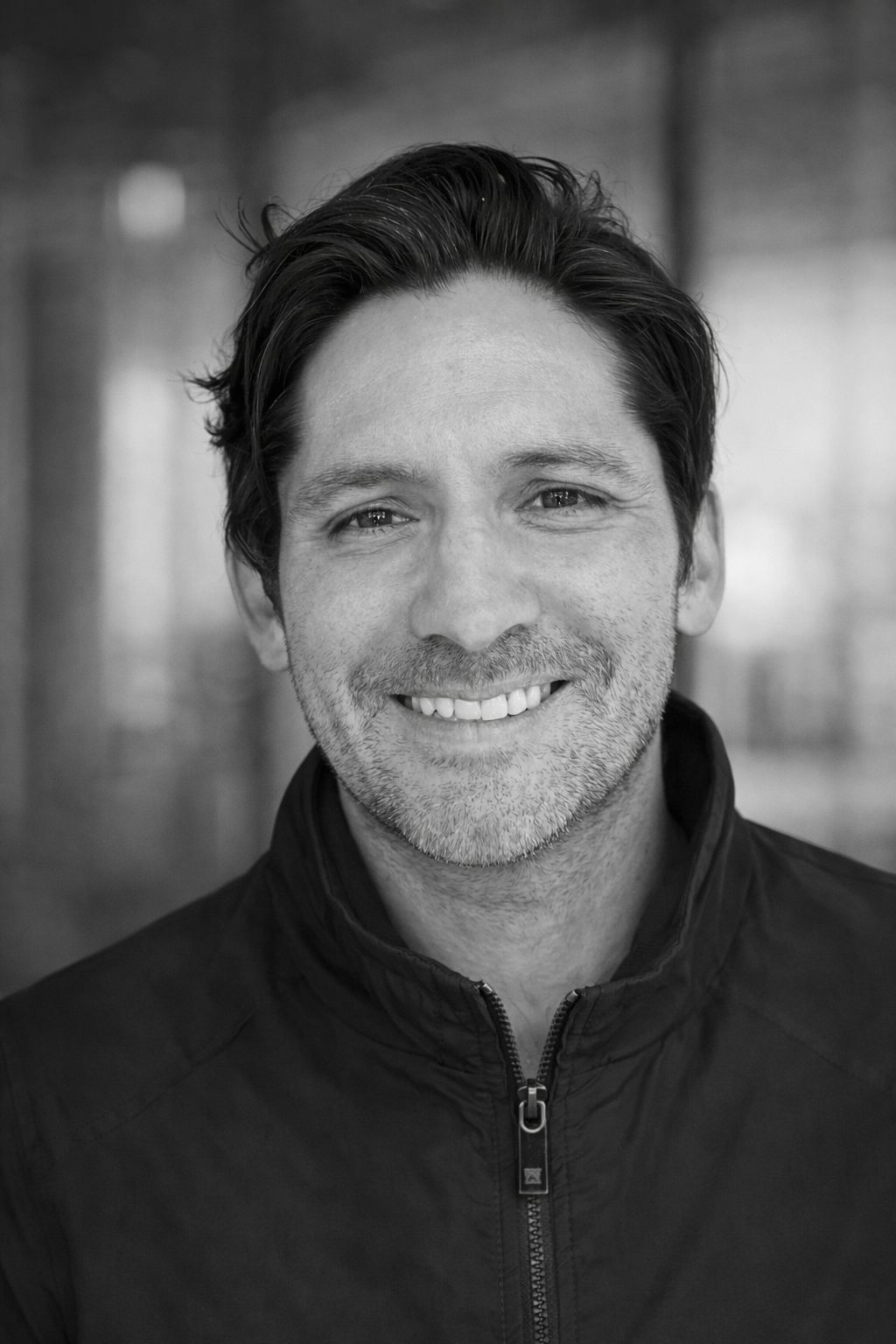
Reinaldo Padron
April 14, 2026
I graduated as a civil engineer from Universidad Metropolitana in Caracas in 2008. Before and after graduating, I worked with a structural design company — learning the technical side, trying to build something on my own. But my father's business was always in my peripheral vision.
He put me on a project that I later understood was his way of keeping me away from the fire — away from la candela, from the real situation. A pasantía, an internship on a related development. He thought he was protecting me.
But I was watching. I was constantly looking at his operations, learning, seeing what could be optimized. And what I saw concerned me.
The Signals Before the Collapse
My father had hundreds of workers on his payroll with not enough work to keep them busy. He could not let them go. Under Venezuelan labor law, laying off workers meant paying massive compensation — liquidación — amounts that the company did not have the cash to cover. So the workers stayed, the burn rate continued, and the problem compounded every month.
I started making reports. Programmable spreadsheets with analysis to calculate personnel liquidation by phases — modeling what it would cost to reduce the workforce in a structured sequence rather than all at once. Another contractor even saw one of those spreadsheets and asked me to help him with his own calculations.
I was 23 years old, building Excel models to manage a labor crisis I did not fully understand yet. I could see something was off. I could feel it. But I did not know how big the problem was.
Then it happened. My father collapsed at the office. A stroke — an ACV. We rushed him to the hospital.
And in that moment, the thing I had sensed was off became very real. It was bigger than I knew. The company was drowning. Five residential developments. Hundreds of workers. Millions in liabilities. And the person who had been holding it all together was now in a hospital bed.
Nobody forced me into this. I chose to step in. My father needed help, and the company he had built needed someone to fight for it. That was a decision, not an inheritance.
What Grupo Loma Linda Was
Grupo Loma Linda was a land development consortium — 262 acres in Caracas, 316 lots, 312 of them residential. The kind of project that, in a stable economy, generates wealth for everyone involved: the families who buy the lots, the shareholders who capitalized the development, the municipality that collects taxes on new construction.
In 2008, Hugo Chávez nationalized Venezuela's cement, steel, electricity, and telecommunications industries. The construction sector — which depends on all four — collapsed. The cost structure of every development my father was managing broke overnight.
In an unstable economy, a project like Loma Linda becomes a liability trap. The land is there. The infrastructure is half-built. The loans are accumulating interest. The buyers are waiting for lots that cannot be delivered because the cement is nationalized and the permits are frozen. And every month that passes, the number gets worse.
By the time I stepped in, the consortium was not in trouble. It was in crisis. The kind where the lawyers start using words like "insolvency" and the shareholders stop returning calls. $12.4 million in liabilities on the books and no clear path to resolve any of them.
What the First Year Looked Like
I will not romanticize this. The first year was humiliation.
I did not know how to read a construction loan agreement. I did not know how to negotiate with institutional lenders. I did not know how to sit in a room full of shareholders — many of them older than my father — and explain why their investment was at risk.
I learned by doing the thing I least wanted to do: I asked for help. I went to other developers in Caracas who had been through crises before. I went to government officials whose signatures I needed on permits. I went to the bankers who held our loans and told them the truth — that the project was distressed, that the borrower was exposed, and that I was the person who was going to fix it.
Some of them helped. Some of them did not. But the ones who helped taught me something I could not have learned in a classroom: in a crisis, the person who tells the truth first earns the right to lead the negotiation.
I sold my car to pay for permit fees that were blocking the next phase of development. That is not a metaphor. I literally sold my car because the permit office required a payment that the company could not make, and without that permit, the entire project timeline would slip by another six months. The math was simple. The car was worth less than six months of compounding interest on a $12.4 million liability.
The People Who Kept Me Standing
The restructuring was not a solo act. None of it happened alone. It happened because a handful of people chose to stand with me when there was no obvious reason to.
I am going to name them. Not as a thank-you list, but because the story is incomplete without them.
Horacio Velutini. One day I received a call from Horacio Velutini, the CEO of Fondo de Valores Inmobiliarios. FVI had built residential condos inside the Loma Linda site and could not transfer titles to their buyers — the final permits and the closing site work were incomplete. He could have treated me as the obstacle. He treated me as the solution. He offered real help, and that help let me finalize the pending work with the municipalities, which meant his buyers could finally receive the properties they had paid for. He was the first developer who looked at what I was fighting and said: I will help you move this forward.
He was not the only one. I sat with other developers across Caracas, one meeting after another, and built what was effectively a crowdfunding round among peers. No return expectation. Just a commitment: I will deliver what you need in order for your projects to close. Enough of them said yes that the pending work moved.
Aquiles Martini. President of the Cámara Inmobiliaria de Venezuela. Another developer with interest in how Loma Linda resolved. I sat with him for days, asking for advice, and he gave me two lessons I still use in every hard conversation.
The first: No puedes vivir bajo un puente y salvar al mundo. You cannot live under a bridge and save the world. You have to choose. He knew what I was fighting was bigger than me. He was not telling me to quit — he was telling me that the fight had to be sustainable, or it would consume me before it resolved anything. That line stuck. It took me years to understand it fully.
The second came when I was preparing to meet one of our lenders with a partial payment — about a quarter of what we owed, enough to cover roughly 50% of the accumulated interest. I was proud of it. I had scraped it together. Aquiles stopped me. Do not go. If you are not paying them off, you have to negotiate. If you pay that today, in two months the interest will be back at the same level. He was right. I was thinking like someone who had a dollar and wanted to use it. He was thinking like someone who had done this before. The dollar was not a payment — it was leverage, and I was about to spend it without buying anything. That conversation changed how I walked into every negotiation after it.
Nestor Sayago. Vice president of FOGADE — Fondo de Garantía de Depósitos y Protección Bancaria, the government fund that absorbed the distressed assets of intervened banks. Every lender my father's business owed money to had been intervened and was in liquidation, which meant the debts had migrated to FOGADE. Nestor saw me fighting, and he saw a younger version of himself in it. He guided me. He protected me from embargos that could have taken assets I needed to keep the project alive. Through him, I negotiated the interest structure on every one of those debts and, over years, paid them all off. I will carry what I owe him for the rest of my life.
María Verónica. She worked for the City. She knew Loma Linda as if it were her own project — every lot, every phase, every piece of pending paperwork. She saw the fight I was in long before she fully understood how big the problem was or how many families it touched, and once she understood, she worked alongside me without quitting. We built strategies together for the things that lived entirely on paper: zoning changes, density transfer, phased La Habitabilidad — the land-development equivalent of a Certificate of Occupancy, the document that turns a site into something deliverable. None of the physical work mattered if the paperwork did not resolve. María Verónica is the reason it did.
Guayu. The leader of the workers. In any crew of hundreds, there is one person everyone listens to — and Guayu was that person. He watched me. He saw me sitting with workers on Fridays I did not have the cash for payroll, explaining what I could and could not do. And then he made a decision to stand with me. Reinaldo, I got you covered. That was the whole sentence. He held the line on the ground while I held the line with the lenders. I became godfather to his son, and that relationship still matters more to me than almost anything else that came out of those years.
Valentin Montana. A friend from Universidad Metropolitana, from before any of this. Every few weeks the phone would ring: Man, what the hell is going on with you — let's have a beer. He was not calling to offer advice, or capital, or a connection. He was calling to pull me out of the fight for one night and remind me I was still a person. I had spreadsheets coming out of my ears and lawyers on three phones, and Valentin would not let me forget that I had a life outside of Loma Linda. Those beers were not a break from the work. They were part of what made the work possible.
Jennifer Celta. She was not hired by me. She came into the picture through a penal attorney who brought her in to analyze specific aspects of mercantile law connected to a case we were facing. Lawsuits were a daily matter in this situation — not an occasional event, a constant one — and I did not have anyone to attend them, review them, propose strategy, negotiate outcomes, or formalize the agreements I was fighting to reach. Jennifer became that person. As she started to understand who I was and what I had been doing for the past three years — because she arrived well into the fight, not at the beginning — something clicked. What started as a narrow legal engagement grew into something much larger than either of us expected. I needed more from her than she could have imagined when she first walked in. Over time, our professional relationship grew into a real friendship. She became the attorney who helped me with everything — and I mean everything. Without her, many of the agreements I was able to negotiate could not have been formalized and implemented. Her father, Gonzalo Celta, was part of her team as well. We connected, and he was a great man.
Luisa Glumm. My wife. We had known each other since we were fifteen — just as friends, nothing more. In 2008, when my world collapsed, I was deep underground. Emergency mode. Working around the clock with no stop. I remember calling her in 2011 because I needed to buy a valve — a specific valve to finally open the water supply to the entire urbanization for the first time, where families were already living. That was a big milestone. I did not end up buying from her, but we started talking again. I was still in urgent mode, but things were more under control by then. She could not have imagined the full scale of the situation, but she knew it was serious trouble. What drew me to her was her ease — the way she looked at things without the weight I carried. We clicked, reconnected, and fell in love. Getting into a relationship with someone in my situation was a risky move for both of us. But she believed in me. She gave me the support I needed to keep fighting, keep solving. Her father, Thorsten Glumm, was also a big part of that. I would bring him reports and he would review them, give me important feedback. He came with me to critical meetings that made pivotal changes in the course of action. After Luisa and I married, she pushed for us to move to the United States. That was never an option for me — I would always say I still needed to clean up the mess, that my father's legacy was too important to walk away from. But she told me something I was not ready to hear: that I had already made the impossible happen, that my role had solved gigantic problems, but that if I kept going at that pace I would end up sick. The stress, the uncertainty, the threats — it was unsustainable. And her words reminded me of what Aquiles Martini had told me once: No puedes vivir bajo un puente y salvar al mundo. If I kept doing what I was doing, I would end up under the bridge after saving the legacy. We moved to Miami. I was skeptical — I thought I would return in a couple of months. It has been ten years. I prepared myself, studied, became a developer, faced my own battles here, and made real progress toward becoming who I am today professionally. If it were not for her, I might be under that bridge.
And then there are the people who do not appear on any org chart. Friends who lent me money so I could make payroll on a Friday, knowing there was no guarantee I could pay them back. I paid every one of them back the moment I resolved something. I will never forget that. People looked at a young man trying to fight something much bigger than him, and they chose to help. I believe God moved through them. I do not know how else to explain it.
I also owe the workers themselves. There were weeks when I sat in front of hundreds of men and told them the truth: I do not have payroll this week. This is what I am doing to fix it. This is when I think I can pay you. Nobody walked off the site. They gave me time I had not earned yet. That is the only reason the project kept moving at all.
And eventually, when the cash allowed it, I ran phased liquidaciones — not just for the field workforce but for the administrative side. Attorneys, accountants, office staff — people who had worked for my father for twenty years. I sat with them one by one. I thanked each of them. I told each of them the same thing: There is no cash flow. There is no alternative. We are closing this part of the company. Those were the hardest conversations of the seven years. They were also, I believe, the most necessary ones. You do not get to release people after twenty years with a group email. You owe them a chair, a conversation, and the truth.
None of what came next — the liability analysis, the interest exoneration, the redesign, the asset disposition — happened because of a spreadsheet. It happened because of the people named above, and others whose names are not in this post because I do not want to turn a tribute into a roster. Without them, there is no restructuring. There is no seven-year fight. There is just a young man under a bridge, trying to save a world that was never his alone to save.
The Restructuring
The turnaround was not one decision. It was hundreds of decisions, made over seven years, each one compounding on the last.
The liability analysis. I mapped every obligation — construction loans, shareholder commitments, contractor payables, municipal fees, legal claims. The $12.4 million was not one number. It was a network of obligations with different creditors, different terms, different levels of urgency. Some could be deferred. Some could be negotiated. Some had to be paid immediately or the entire structure would collapse. Understanding which was which — that was the first year's work.
The interest exoneration. This was the single most important negotiation of the seven years. The construction loans had been accumulating interest during the crisis period — interest on money that could not be deployed because the project was frozen by forces outside anyone's control. I went to the institutional lenders and made the case for exoneration: the borrower is solvent, the land has value, the project can be completed — but not if the interest burden consumes the capital that should be building infrastructure. It worked. Not fully, not easily, and not with every lender. But enough of them agreed to restructure the terms that the project became viable again.
The redesign. 108 acres of the 262-acre site were redesigned for mixed-use — a different product type, a different density, a different cost structure. This was not an aesthetic decision. It was an engineering decision driven by the new cost reality of construction in a nationalized economy. The redesign achieved significant construction cost reductions while maintaining the value proposition for lot buyers. Every square meter was re-evaluated against what the market could absorb at a price point that covered the revised cost of delivery.
The asset disposition. Some assets had to be sold. Some commitments had to be unwound. My role was to build the analysis — model the scenarios, calculate the exposure, and present the options. My father made the final calls. He was the decision-maker. I was the person who made sure the decisions were grounded in numbers, not hope. Every scenario I modeled was framed against the same question: does holding this asset create more value than the liability it is generating?
What Seven Years Teaches You
People ask me what I learned. The honest answer is that seven years in a crisis teaches you things that no degree, no course, and no mentor can deliver. Not because those things are not valuable — they are. But because crisis learning is embodied. It lives in your nervous system, not in your notes.
Here is what I know now that I did not know at 24:
Every crisis is a system failure, not a person failure. Loma Linda did not fail because someone made a bad decision. It entered crisis because the system it operated within — the Venezuelan economy, the regulatory environment, the capital markets — changed faster than the project's structure could adapt. The person who inherits a crisis is not the person who caused it. Their job is not to assign blame. Their job is to redesign the system under the new constraints.
The truth is faster than the story. In a distressed situation, every stakeholder has a story about why things went wrong and who is responsible. The person who cuts through the stories and states the facts — here is what we owe, here is what we have, here is what we can do — is the person who moves the situation forward. I learned this in my first meeting with the lenders. They did not want my optimism. They wanted my spreadsheet.
Small decisions compound in both directions. The permit I paid for with my car unlocked a phase of development that generated revenue that paid down a loan that reduced the interest burden that made the next negotiation possible. If I had not paid for that permit — if I had waited, or deferred, or hoped — the compounding would have gone the other direction. Every month of inaction in a crisis is a decision to let the numbers get worse.
You cannot save everything. Sometimes the right strategy means accepting that some things you planned to build will not get built. Some value you planned to capture will not be captured. The discipline is in the analysis — knowing which pieces to protect and which to release, and presenting that clearly to the person who makes the call.
Why I Tell This Story
I tell this story because it is the foundation of everything I do now. When I sit across from a GC who is losing $600K a year to system failures, I understand what system failure looks like at scale. When I advise a developer who is holding a site without a feasibility model, I understand what happens when you hold too long without a plan. When I build an AI tool that reads construction plans, I understand why the compliance database has to be right — because in the built world, "close enough" is a liability.
Loma Linda was not a line on my resume. It was seven years of learning how systems break and how they get rebuilt.
What My Father Built
Before I say anything else, I need to say this: what my father built was extraordinary.
He took 262 acres of raw land and envisioned an entire community — 316 lots, infrastructure, roads, utilities, a development that would house hundreds of families. He did this in a country where the odds were stacked against every developer, where regulations changed overnight, where the supply chain could be nationalized by decree. He built it anyway.
The crisis took the project in a direction none of us could have anticipated. But what he created — the vision, the relationships with shareholders, the sheer persistence of moving earth and pouring concrete in an environment designed to stop you — that is something I will always be proud of. His resilience and perseverance to overcome challenges and build an amazing land development against the odds inspires everything I do.
I did not build Loma Linda. He did. I chose to step in and fight for it. The thing worth fighting for — the thing that had value, that was worth seven years of my life — existed because of him.
My father has since passed away. I carry what he built — and what he taught me by building it — in everything I do.
What I Carry Forward
In 2016, I moved to the United States. Not to run away from Loma Linda — but to find my own path. I had spent seven years solving problems that were not mine to begin with, and I had resolved many of them. The analysis, the strategies, the negotiations I led on interest exonerations, the redesign work — those contributed to real outcomes that helped stabilize the project and protect stakeholders. The final decisions were always my father's.
But Loma Linda is not fully resolved. There are still problems to work through. I am no longer the person leading that effort, but the situation remains part of my story — not as a failure, not as a success, but as something real and unfinished that shaped how I think about every system I build.
Everything I build now — every proposal, every diagnostic, every system — carries that experience in its architecture. Not as a story I tell. As a discipline I practice.
Stay in the loop
New thinking on operations, AI, and growth — delivered when it's ready.
Work together
Got a live deal?
Send me a real estate deal and I'll underwrite it in 10 minutes — investment memo, Excel model, lender package — yours to keep. No cost, no commitment.